When Skin Reactions Look Similar but Behave Very Differently
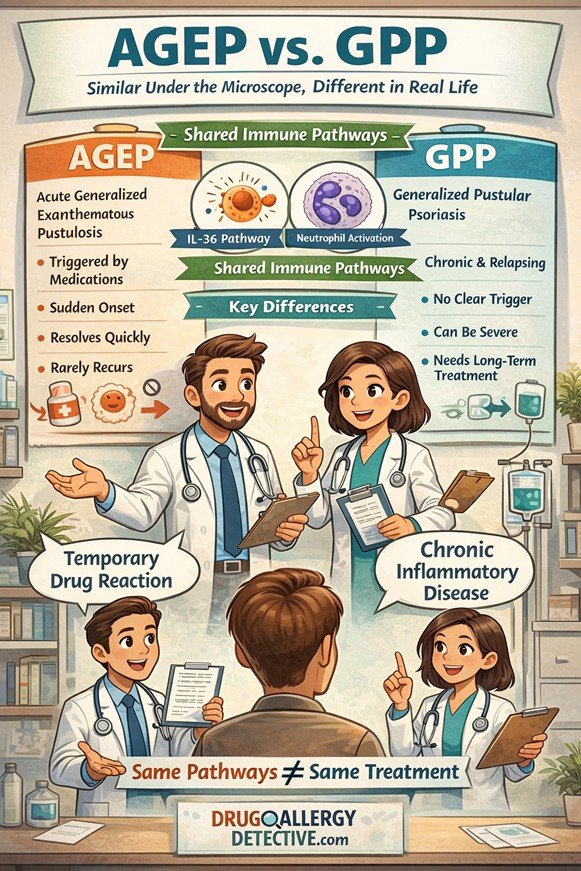
Illustration comparing AGEP and GPP, highlighting shared immune pathways and key clinical differences.

AGEP vs GPP: When Skin Reactions Look Similar but Behave Very Differently Skin rashes can be alarming, especially when they appear suddenly and spread quickly. Two conditions that often cause confusion are acute generalized exanthematous pustulosis (AGEP) and generalized pustular psoriasis (GPP). AGEP vs GPP is a comparison that often raises confusion among both patients and clinicians. These two skin conditions can appear strikingly similar at first glance, yet their causes, clinical behavior, and long-term management are very different. Understanding these differences is important — not only for accurate diagnosis,…
Read More

ROAT Patch Testing in SCARs: Is It Time to Reconsider?

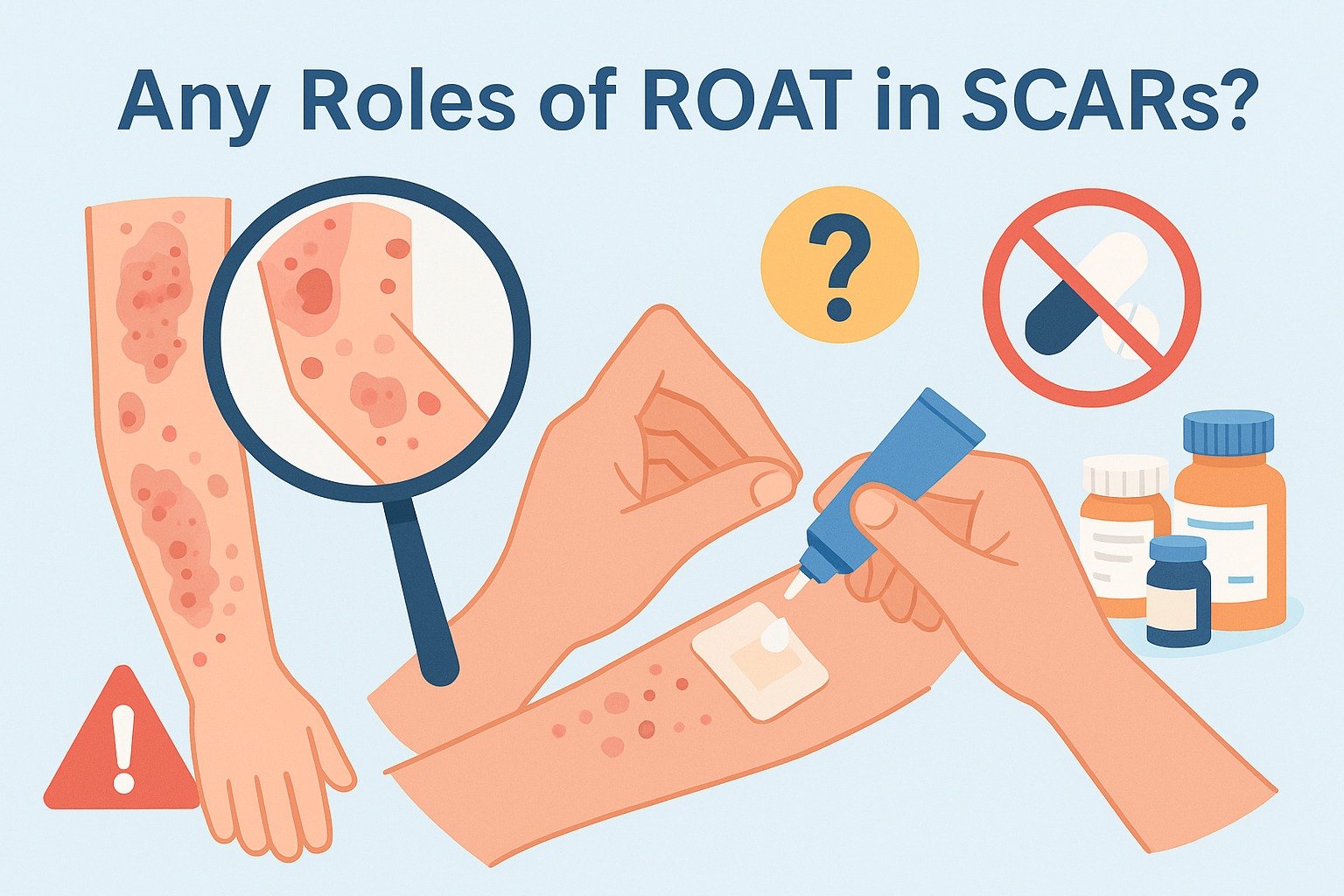
Illustration symbolizing drug allergy testing with ROAT in severe cutaneous adverse reactions (SCARs) such as DRESS, AGEP, and FDE

Introduction Severe cutaneous adverse reactions (SCARs) — such as DRESS, AGEP, and SJS/TEN — are among the most serious drug hypersensitivity syndromes.The traditional approach is simple: avoid all suspected drugs indefinitely. But this blanket avoidance often creates real-world problems: This raises an important question:👉 Is it time to reconsider the role of patch testing — and even the Repeated Open Application Test (ROAT) — in managing SCARs? Why ROAT Is Feared in SCARs The Repeated Open Application Test (ROAT) is a simple diagnostic tool in delayed hypersensitivity: Concerns in SCARs:…

Read More

Rethinking Drug Allergy Management: Finding Balance Between Caution and Access in SCARs

Drug allergies present a complex landscape, demanding tailored management strategies based on the reaction’s nature and severity. We’ve witnessed significant progress in “de-labeling” allergies to common drugs like penicillin through careful testing, allowing many to safely access essential treatments. However, the approach to severe cutaneous adverse reactions (SCARs) – encompassing Stevens-Johnson Syndrome (SJS), Toxic Epidermal Necrolysis (TEN), Drug Reaction with Eosinophilia and Systemic Symptoms (DRESS), and Acute Generalized Exanthematous Pustulosis (AGEP) – often stands in stark contrast: a broad and often indefinite avoidance of all potentially implicated drugs. While the…

Read More

Reevaluating the Approach to Severe Cutaneous Adverse Reactions (SCARs): Is Drug Rechallenge Always Off the Table?

Severe Cutaneous Adverse Reactions (SCARs), such as acute generalized exanthematous pustulosis (AGEP), Drug Reaction with Eosinophilia and Systemic Symptoms (DRESS), and Stevens-Johnson Syndrome (SJS), are among the most feared drug-related complications. These conditions can result in devastating outcomes, and the conventional approach to managing SCARs emphasizes strict avoidance of the suspected culprit drug to prevent potentially fatal recurrences. But is avoidance always the only path forward? Could there be room for a more nuanced strategy in specific cases? Not All SCARs Are Created Equal SCARs represent a spectrum of disorders,…

Read More