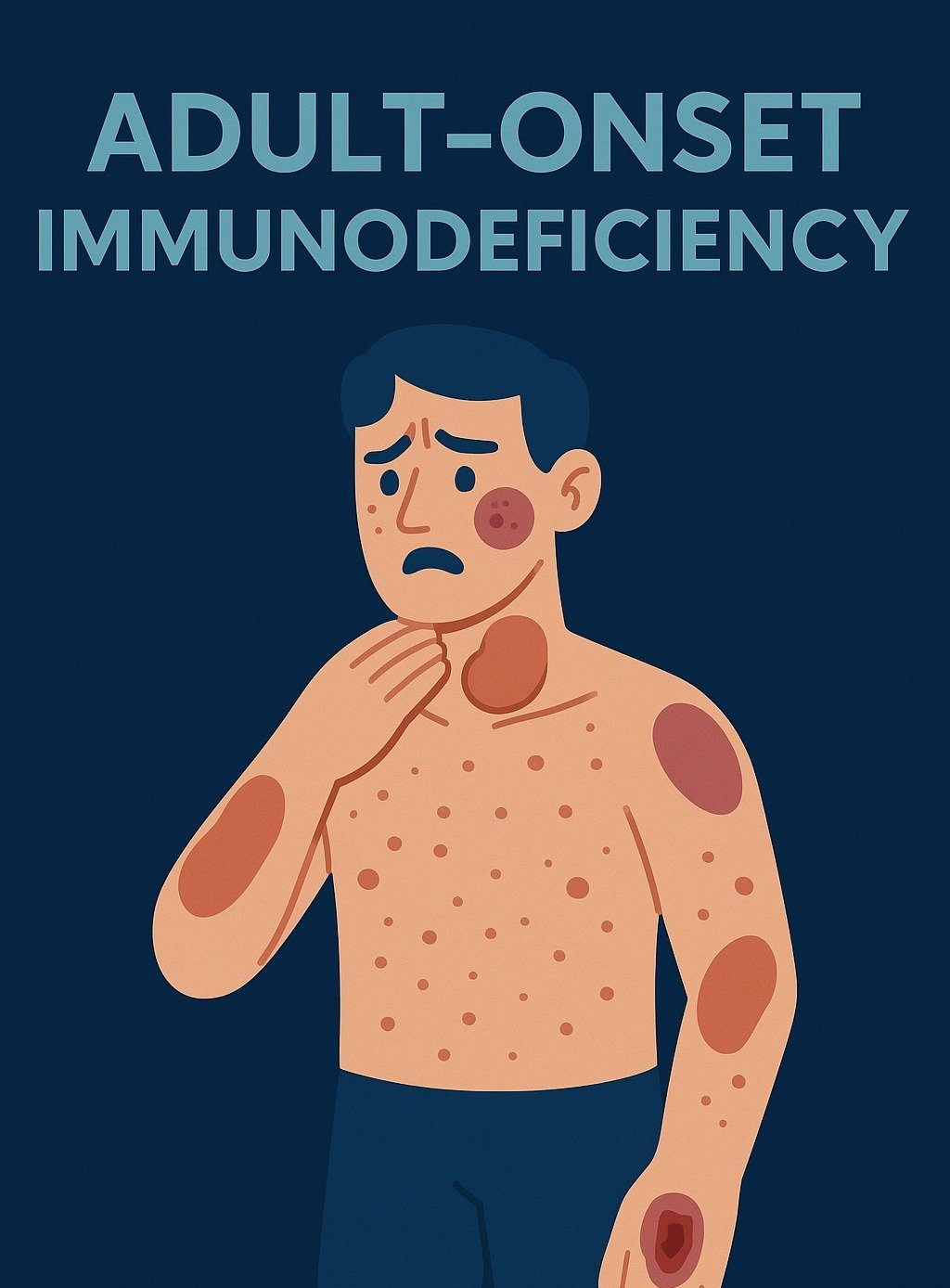
This condition—often called Adult-Onset Immunodeficiency Syndrome (AOIDS)—is one of the most important but overlooked causes of severe opportunistic infections in HIV-negative adults with normal CD4 counts. Awareness remains low, especially outside Asia, despite an increasing number of global cases. 🔎 Quick Summary: When to Suspect Adult-Onset Immunodeficiency Adult-onset immunodeficiency due to anti–interferon-gamma (anti–IFN-γ) autoantibodies should be considered in HIV-negative adults—especially those with Asian ancestry—who develop unexplained, recurrent, or disseminated intracellular infections despite normal lymphocyte counts. Key clinical clues Pneumocystis jirovecii pneumonia (PJP) can occur but is significantly less common than…
Read MoreAdult-Onset Immunodeficiency From Anti–Interferon-Gamma Autoantibodies: The Underrecognized Cause of Opportunistic Infections in HIV-Negative Adults